


Workplace Safety
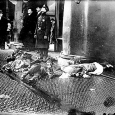
Death, injury, and illness haunt the American workplace. Although injury and deaths rates have fallen over the last 40 years an average of 12 workers still die on the job every day. More than 50,000 workers die every year from occupational illnesses. Tragedies like the 1911 Triangle Shirtwaist Fire, which killed 146 workers created public demand for workplace safety laws. Recent disasters such as the 2010 Upper Big Branch Mine and Deepwater Horizon Oil rig continue to show the need for stronger health and safety standards and enforcement.
Commentary

"What did we set up the government for?"
Cry Wolf Quotes
This night work has been rendered necessary largely because of the Government’s perfectly unreasonable attitude towards large corporations, which has made it impossible for managers of large concerns to know whether….they could expand their plans to keep up with increasing demands or not.
The hardship entailed on a certain proportion of the home workers, without means of support, the distress they will suffer, their loss will be greater than the benefit coming to the public through the elimination of that work.
They pay absolutely no attention to the fire hazard or to the protection of the employees in these buildings. That is their last consideration.
Each grain handling facility is unique, and the state of the art is constantly changing. Further, historically very little scientific research has been done on some of the fundamental questions involved in grain dust explosions.
Related Laws and Rules
- AB 1127 or the “Tosco Bill”
- Emergency Planning and Community Right-to-Know Act of 1986
- Ergonomics Standard (2000)
- Humane Treatment of Hotel Room Attendants Act of 2004
- New Jersey Worker and Community Right-To-Know Act
- Occupational Safety and Health Act
- OSHA Formaldehyde Standard
- OSHA Grainhandling Standard
- OSHA Hazard Communication Standard
- OSHA Vinyl Chloride Standard
- OSHA's Asbestos Standard
- OSHA's Cotton Dust Standard
- OSHA’s Bloodborne Pathogens Standard
- OSHA’s Ethylene Oxide Standard
- OSHA’s Excavation Standard
- OSHA’s Lead in Construction Standard
- OSHA’s Lockout/Tagout Standard
- OSHA’s Methylene Chloride Standard
- Philadelphia Worker and Community Right-to-Know Act
- Safety and Health Improvement and Regulatory Reform Act of 1995
- Triangle Factory Laws
Evidence
-
Cranes & Derricks: The Prolonged Creation of a Key Public Safety Rule
This report recounts the creation of an important rule that was badly needed to protect workers—and, sometimes, passersby—from the dangers posed by cranes at construction sites.
-
Regulations at Work: Five Rules that Save Workers’ Lives and Protect their Health
This paper looks at five worker-safety regulations that were tremendously successful in reducing employee injuries, illnesses and fatalities.
-
Prevention Pays: Solutions to Help Workers and Businesses Thrive
Investments up front and rules prevent the next disaster.
-
Applying Quality Criteria to Exposure in Asbestos Epidemiology Increases the Estimated Risk
The government of the Netherlands recently decided that their occupational exposure limit to asbestos was still too high. The Health Council of the Netherlands proposed dropping the limit from .01 percent to .002 percent. OSHA's occupational limit is .1 percent.
-
Industry Opposition to Government Regulation
The real costs of specific regulations, in chart form.
Backgrounders & Briefs
Dying To Know: A Historical Analysis of the Right-To-Know Movement
This survey provides a sweeping analysis of the right-to-know movement in America.
2011 Death on the Job
The AFL-CIO's annual report about death, illness, and injury at work.
Health and Safety at Work in Europe (1999-2007): A Statistical Portrait
An extraordinarily detailed report that gives a good idea of just how far behind the U.S. in comparison to other developed nations.
Gauging Control Technology and Regulatory Impacts in Occupational Safety and Health
Information on multiple OSHA regulations and their costs. In almost every case, the regulations were far cheaper than the agency estimated.
Resources
University of California-Berkeley Labor Center carries out research on labor and workplace-related issues.
Institute for Women’s Policy Research is a prominent think tank that is largely focused on American women's issues. This covers everything from pay equity to welfare reform to domestic violence.
The Service Employees International Union represents workers the public sector and a variety of industries in the United States.
Occupational Safety and Health Agency is responsible for government oversight of workplace health and safety. They can issue regulations and conduct investigations of specific industries and workplaces.
