


Consumer Product Safety
Consumer product safety became an animating political force on the national level during the 1960s. In 1972, the Consumer Product Safety Commission (CPSC) was created to regulate and, if necessary, recall and ban products deemed unsafe for the public. Many consumables are not covered by this agency, because other federal agencies already have jurisdiction over such dangerous products as cars, alcohol, guns, and pesticides. One of the CPSC’s major accomplishments was the ban on lead paint in 1977.
Commentary
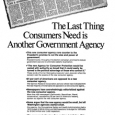
Cry Wolf Quotes
To many groups, the [Consumer Product Safety] Commission’s actions, to date, appear to project an anti-business bias. The Commission too frequently seems to forget that government does not have a monopoly on concern for product safety.
This approach assumes that all consumers want the same thing. As others have pointed out, the ‘consumer interest’ is not a monolithic interest which is easily identified. While some consumers may want safe, high quality products, other consumers may wish to sacrifice these qualities for a lower price tag.
With respect to cigarettes, cautionary labeling cannot be anticipated to serve the public interest with any particular degree of success. The health hazards of excessive smoking have been well-publicized for more than ten years and are common knowledge…
The class action concept is misdirected and does not meet the overriding need of establishing a workable method to prevent frauds and deceptions. At best, class actions are only remedial to the consumer. At worst, they are a deceptive promise of prevention which the consumer is unlikely to see fulfilled. This is especially true of the low-income consumer who is the typical prey of unscrupulous operators, particularly in inner-city areas.
Related Laws and Rules
Backgrounders & Briefs
Good Rules: Ten Stories Of Successful Regulation
Demos looks at ten laws and rules that we take for granted.
Resources
Consumer Federation of America defends the consumer interest in fields ranging from housing and financial services to food safety.
National Highway Traffic Safety Administration is the agency that oversees auto and highway safety regulations, auto recalls, and CAFE standards.
Advocates for Highway and Auto Safety is an alliance of consumer, health and safety groups and insurance companies and agents working together to make America's roads safer.
